

Tea · 5 min read
What Is Matcha? From Shaded Leaf to Stone-Ground Powder
Most tea is steeped and thrown away. Matcha is the rare one you drink whole — which is why every step before the grinding matters.
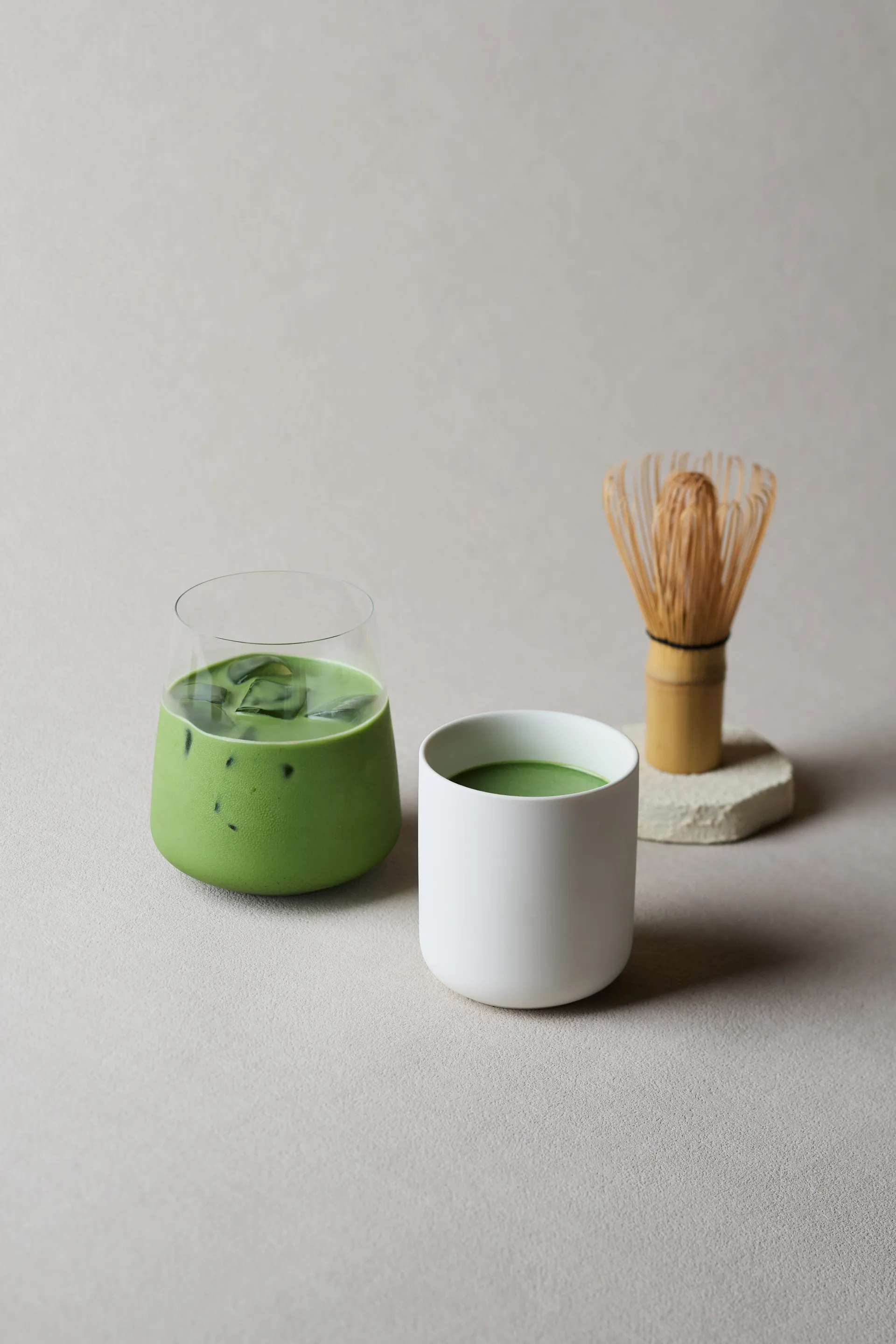
Almost every tea in the world is an infusion. Leaves meet hot water, give up what they can, and are discarded. Matcha is the exception: the leaf is ground to a powder and suspended in the water, so you drink the whole thing. That single difference explains nearly everything else about how it is grown, processed and prepared.
Shading: the step that makes matcha taste like matcha
Before harvest, the tea trees are covered. Deprived of full sun, the plant responds by producing more chlorophyll and holding on to more of the compounds that read on the palate as savoury depth — the quality usually called umami. This is why good matcha is a deep jade rather than a dull olive, and why it tastes rounder and less astringent than a sencha grown in open sun.
It is also why shading is not a detail you can skip or shorten without the cup telling on you.
From picked leaf to tencha
Once picked, the leaves are steamed almost immediately. Steaming halts oxidation — the same process that would otherwise turn a green leaf brown, as it does deliberately in black tea — and fixes the colour and the fresh, vegetal character in place. The leaves are then dried and refined, with stems and veins removed. What remains is tencha: the only thing that is ever supposed to become matcha.
The grinding
Tencha is then ground between granite stones. It is a famously slow process, and the slowness is the point: grinding generates heat, and heat costs aroma. Push the stones faster and you gain throughput while losing exactly the qualities the shading was for.
At KOKO Kawane one matcha is stone-ground fresh on site each day and served in limited portions — we call it the Daily Micro-Mill. It exists because the gap between matcha ground this morning and matcha ground months ago is not subtle, and it is easier to taste than to describe.
So how is matcha different from green tea?
- Green tea is steeped and the leaf is discarded; matcha is powdered and consumed whole.
- Matcha is shaded before harvest; most green tea is not.
- Matcha is made only from tencha — leaf refined with stems and veins removed.
- Matcha is whisked into suspension rather than infused and strained.
The practical consequence is that with matcha there is nowhere to hide. There is no spent leaf to carry away a flaw. Whatever the field, the shading and the mill did, you drink.
More reading
Tsuyuhikari and Okumidori: The Two Cultivars We Serve
One is bright, crisp and quick. The other is deep, full and slow. Serving only one would tell half the story.
How to Store and Prepare Matcha at Home
Most disappointing matcha at home is not bad matcha. It is good matcha stored badly, or whisked in the wrong order.