

How to · 4 min read
How to Store and Prepare Matcha at Home
Most disappointing matcha at home is not bad matcha. It is good matcha stored badly, or whisked in the wrong order.
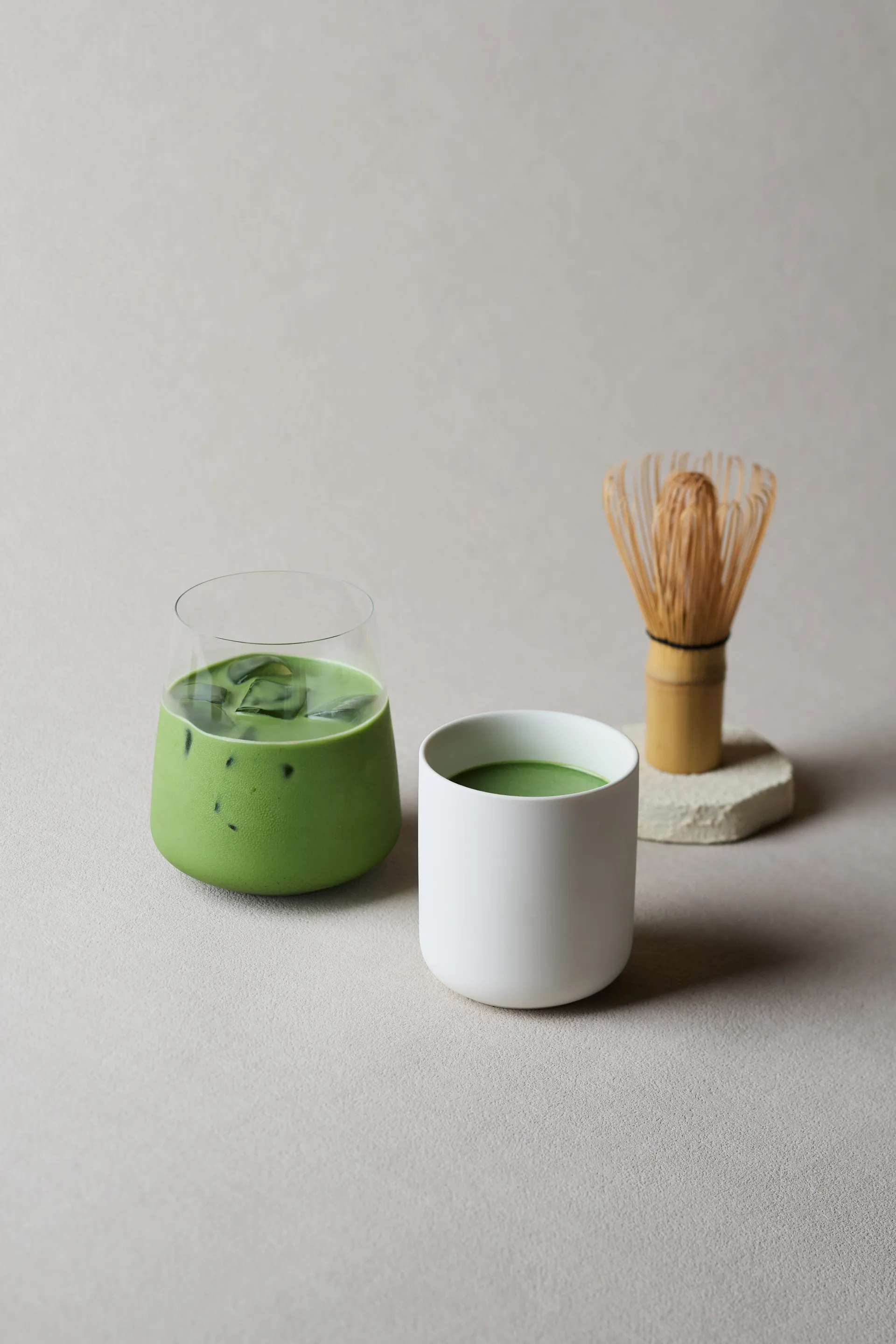
Matcha is a powdered whole leaf with an enormous amount of surface area exposed to the air. That is what makes it vivid, and it is also what makes it fragile. Two things account for most of the disappointment people have with matcha at home, and both are fixable.
Storage: keep it away from four things
Matcha is sensitive to light, heat, humidity and oxygen. Each of them drives oxidation, and oxidation is what turns a bright jade powder dull and flattens its aroma.
- Store matcha and hojicha powders in an airtight, opaque container.
- Keep that container somewhere cool, dark and dry.
- Avoid heat, light, open air and moisture — they are what cause oxidation.
- Close it promptly. The time a tin spends open is not free.
A clear jar on a sunny counter looks wonderful and is the fastest way to ruin what is inside it.
Preparation: paste first, then the rest
The single most useful habit is to stop trying to whisk powder into a full cup of liquid. Whisk the matcha with a small amount of warm water first, and work it into a smooth, clump-free paste. Clumps form when dry powder hits deep water; a paste never gives them the chance.
From that paste, go wherever you like:
- Usucha — top up with warm water for a thin, traditional bowl.
- Latte — combine the paste with milk. Oat works well and is what we pour at no extra charge.
- Iced — pour the paste over ice, then top to taste.
Water that is at a rolling boil is worth avoiding; warm rather than boiling is kinder to the aroma you paid for.
Bringing some home
Our single-origin cultivars — Tsuyuhikari and Okumidori — along with the signature Soemon Blend and our hojicha, are available in retail packs and curated gift sets.
More reading
What Is Matcha? From Shaded Leaf to Stone-Ground Powder
Most tea is steeped and thrown away. Matcha is the rare one you drink whole — which is why every step before the grinding matters.
Tsuyuhikari and Okumidori: The Two Cultivars We Serve
One is bright, crisp and quick. The other is deep, full and slow. Serving only one would tell half the story.