

Tea · 4 min read
Tsuyuhikari and Okumidori: The Two Cultivars We Serve
One is bright, crisp and quick. The other is deep, full and slow. Serving only one would tell half the story.
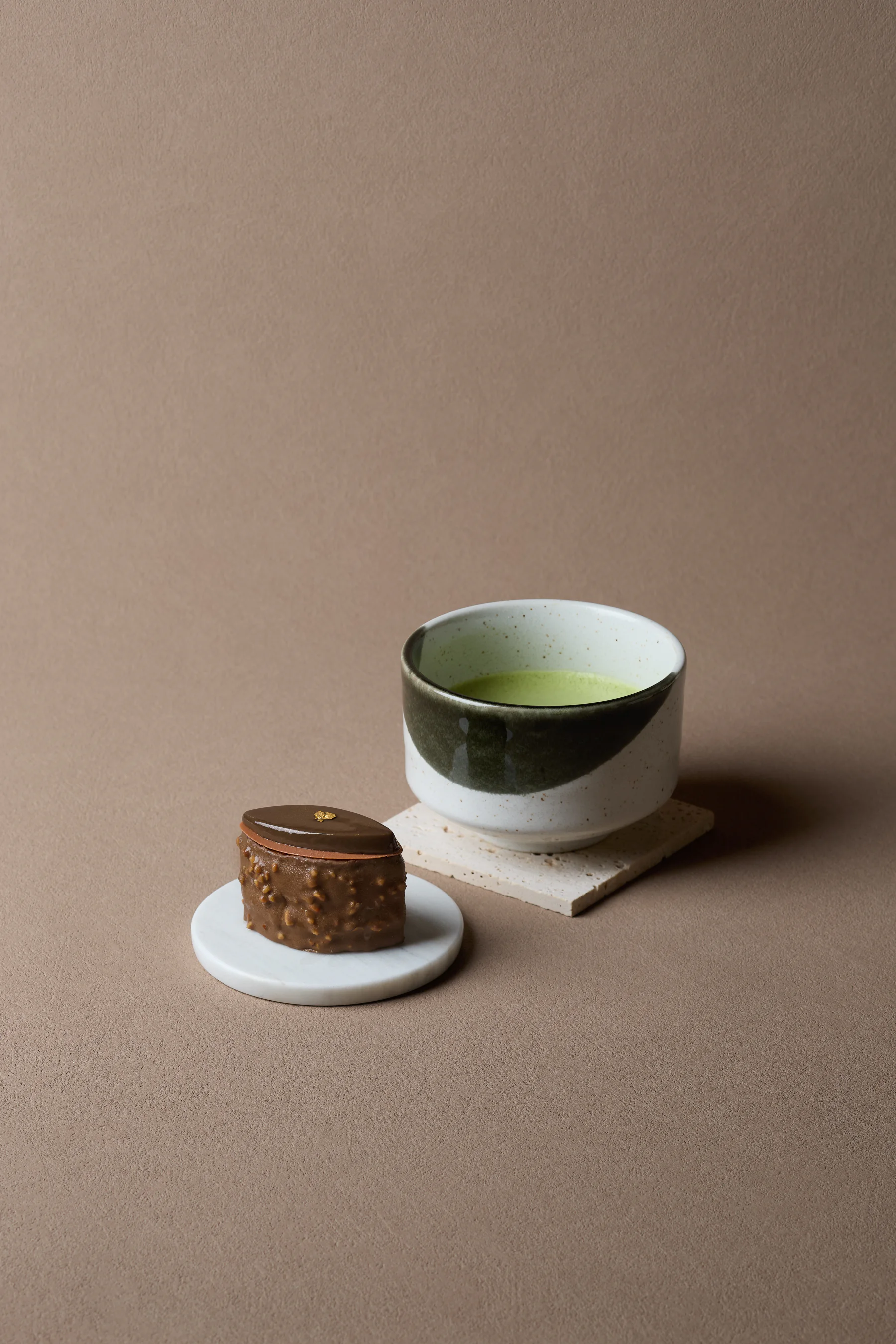
Tea is varietal in the way wine is. The same hillside, the same hands and the same mill will still give you a different cup depending on which cultivar was planted, and the difference is not marginal. We serve two single-origin cultivars, and they sit at opposite ends of what matcha can be.
Tsuyuhikari — bright, soft, crisp
Tsuyuhikari leads with aroma. It is defined by a bright top note, a soft sweetness, and a crisp, refreshing impression that clears rather than lingers. It is the more immediately charming of the two, and the one that tends to convert people who think they do not like matcha — usually because what they have had before was bitter, over-hot, or old.
Okumidori — jade, full-bodied, deep
Okumidori is the classic. It is renowned for a vibrant jade colour, a full body, and a deep umami that delivers the complexity people mean when they talk about fine matcha. Where Tsuyuhikari is quick and bright, Okumidori is slow and broad; it coats the palate and stays.
Why both
Both cultivars thrive in Kawane's terroir, so neither is a compromise made for the sake of variety. We chose them to show the complete spectrum of the leaf — bold strength and umami at one end, delicate aroma and silkiness at the other — rather than presenting a single house style as though it were the whole of matcha.
If you would rather not choose, the Usucha Flight puts three side by side: Tsuyuhikari, our Soemon Blend, and Okumidori. Tasted in sequence, the distinctions stop being abstract within about thirty seconds.
More reading
What Is Matcha? From Shaded Leaf to Stone-Ground Powder
Most tea is steeped and thrown away. Matcha is the rare one you drink whole — which is why every step before the grinding matters.
How to Store and Prepare Matcha at Home
Most disappointing matcha at home is not bad matcha. It is good matcha stored badly, or whisked in the wrong order.