

The room · 3 min read
Ochagashi: Why Japanese Sweets Are Served With Tea
The sweet is not there to be nice. It is there to do a job, and the tea is built expecting it.
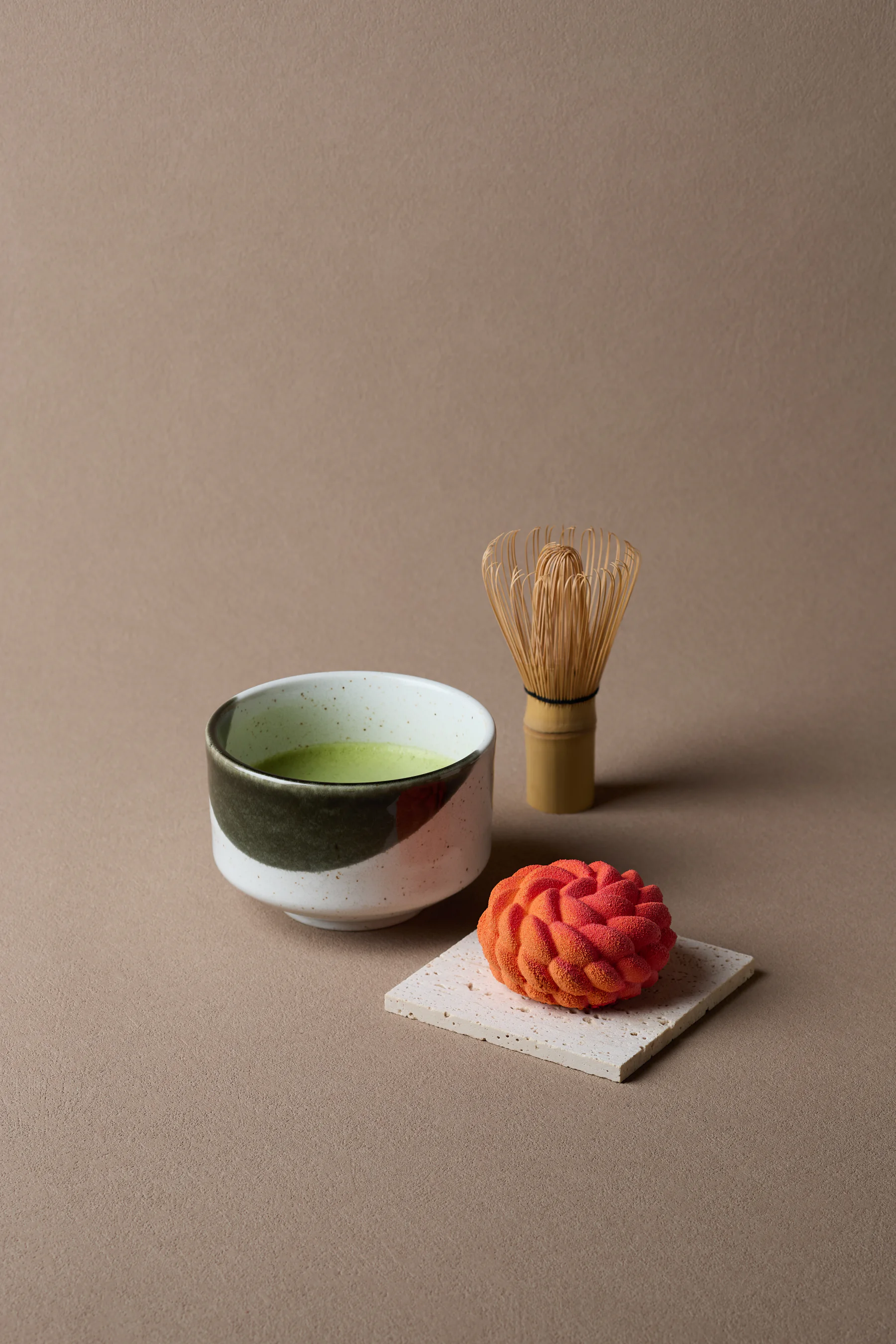
In a Western café the pastry is the indulgence and the drink is the accompaniment. In Japanese tea the relationship runs the other way, and the sweet has a specific job to do.
Balance, not decoration
Good matcha carries a pronounced savoury depth and a measured bitterness. Those are virtues, not faults — but tasted alone and continuously, they accumulate. A confection eaten just before the bowl resets the palate and gives the tea's umami something to push against, so the first mouthful lands as complexity rather than as astringency.
This is why the pairing is deliberate rather than decorative. Our Ochagashi set is exactly that: one Japanese confection with one single-origin usucha, chosen together to balance rich tea umami against delicate sweetness.
Where the French technique comes in
KOKO Kawane bridges centuries of tea farming with cakes and pastries made through a contemporary fusion of classic Japanese and French technique. The Japanese side sets the brief — restraint, seasonality, a sweetness that serves the tea rather than shouting over it. The French side supplies the craft: lamination, tempering, the patisserie discipline that makes a delicate idea hold its shape.
The intended result is a plate where neither element is a garnish for the other.
More reading
What Is Matcha? From Shaded Leaf to Stone-Ground Powder
Most tea is steeped and thrown away. Matcha is the rare one you drink whole — which is why every step before the grinding matters.
Tsuyuhikari and Okumidori: The Two Cultivars We Serve
One is bright, crisp and quick. The other is deep, full and slow. Serving only one would tell half the story.